
The Equality, Diversity, and Inclusion (EDI) Toolkit
This toolkit is for every social enterprise that is working to improve diversity, equity and inclusion in their organisations - within their teams, supply chains, and mission. Our vision is that it will enable a more innovative and productive social enterprise sector that generates far more inclusive economic growth and social impact. Though the toolkit will be updated at regular intervals, it is for inspiration and guidance, so please always seek appropriate legal advice.
What is this toolkit?
This is a comprehensive toolkit of curated resources selected by entrepreneurs and Equity, Diversity and Inclusion (EDI) experts at the Skoll Centre for Social Entrepreneurship and within the EnSpire initiative, IDEA.


The tools primarily address developing inclusive recruitment practices, serving diverse customers inclusively, and building diverse supply chains. The resources include, Assessment exercises, Podcast episodes, Videos Online activities and more! Each resource has been selected to be suitable for any social enterprise wanting to learn, implement good practices, and embed intentionality and accountability for diversity, equity, and inclusion.
Why should you use this toolkit?
Internal teams, supply chains and customers are the most central components of any private company's business model and the tip of the spear for businesses to generate socio-economic impact that furthers equality. As a starting point, we have included a high-level baseline review tool to map out levels of representation across these components.
We recommend this as a kick-off exercise for social enterprise leaders looking to intentionally build in strategies for greater diversity, equity and inclusion.
Is this toolkit specific to Oxford?
The toolkit also integrates insights from the social entrepreneurship ecosystem in Oxford, including video case study interviews with four active social enterprises and community organisations.
Rather than just reflecting good practices recommended by experts and researchers, the toolkit also captures tried and true approaches and reflections from real social entrepreneurs in Oxford to reflect lived experience from within the Oxford ecosystem.
If you have ideas or suggestions on how to expand this toolkit, please feel to reach out to the IDEA team on IDEA@admin.ox.ac.uk
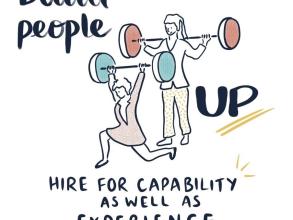
Diversity and equity begin within your company's team. Without representation internally, it can be extremely challenging to serve diverse consumers and build both culture and operations in ways that don't reinforce existing paradigms of exclusion or marginalisation.
There are a wide variety of long-standing and emerging practices to help both attract and retain diverse talent in their team. While building a diverse workforce is a strategic advantage, the true upside comes when leadership reflects the diversity of the team that they lead diversity is reflected in leadership. Global research shows that companies with both gender and racial diversity in Management and board level outperform competitors that are not representative. For social enterprises, gender and racial diversity are often critical to designing strategies and programs that are well-attuned with target users and beneficiaries.
While many companies have started improving hiring practices, this does not translate into diverse leadership due to retention, promotion, and internal culture. A positive company culture ensures that everyone has the potential to achieve great things within your company, which then translates to greater representation at all levels.

As OECD countries, particularly in capital cities, become more diverse and as the emerging market consumer class grows, there are significant commercial upsides to understanding and engaging more diverse consumer base. Middle-income consumers in global cities are increasingly racially diverse and not considering their needs means money on the table. Not to mention the fact that women control upwards of an estimated 80% of household consumption decisions.
Many social enterprises build their business models on the premise of serving under-served or vulnerable groups, which often have significantly higher female or non-white representation. In these cases, limited understanding of the viewpoints of these groups is not just a missed financial opportunity- it can lead to misaligned products/services that don't achieve their pledged impact or outcomes.
Building great products and customer loyalty means informed and conscious decisions about how differences – gender, ethnicity, sexual orientation, and socioeconomic status – can inform worldviews and purchasing decisions.

Supply chains can comprise a massive component of a company's commercial footprint. Building diverse and equitable supply chains is thus an opportunity to create strategic advantages, better understand diverse consumers and expand socio-economic impact.
In many cases, integrating more under-represented founders and suppliers into the value chain can require intentionality and adaptations. Many enterprises, including social enterprises, do not have full visibility of how their supply chains help or hinder gender and racial equity and representation. Gaining such visibility is a first step in accountability for socio-economic impact; leveraging such visibility to build inclusive and equitable supply chains is an even bigger step.
References
-
Desvaux, G., Devillard-Hoellinger, S. & Baumgarten, P. Women matter - Gender diversity, a corporate performance driver. https://www.womenonboards.net/getattachment/Resources/Key-External-Repo… (2007).
-
Davis, K. M. 20 Facts And Figures To Know When Marketing To Women. Forbes https://www.forbes.com/sites/forbescontentmarketing/2019/05/13/20-facts…;
Newsletter
Get the latest entrepreneurship news and opportunities delivered straight to your inbox each week!